


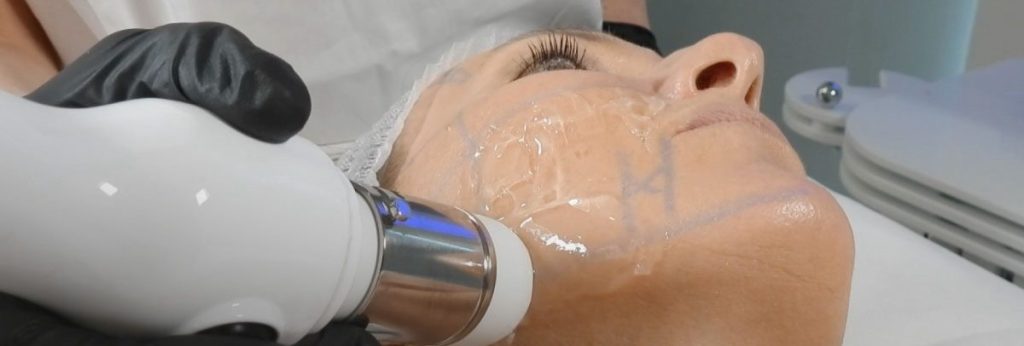
If you have been researching HIFU skin tightening on the Gold Coast or looking into RF microneedling, you have probably come across both options. They are often mentioned in the same conversation, but they work in different ways and may be suited to different concerns.
This article explains what each treatment involves, how they differ, and what to consider when trying to decide which option may be worth discussing at a consultation. It is not a ranking exercise. Neither treatment is universally better than the other.
What Is HIFU?
HIFU stands for High Intensity Focused Ultrasound. It is a non-surgical treatment that delivers focused ultrasound energy to deeper structural layers of the skin.
At Oo La La, HIFU skin tightening is delivered using CFU ÈLife, a focused ultrasound device used in treatments targeting the face and neck. For a full overview of what the treatment involves, suitability criteria, and what to expect, see the CFU ÈLife HIFU skin tightening treatment page. The technology is designed to reach depths that many surface-level treatments do not access. The aim is to create a controlled thermal stimulus in targeted tissue, which may support gradual changes in skin firmness over time.
Changes from HIFU treatment occur gradually. Collagen remodelling is a biological process and does not happen immediately. How the body responds varies between individuals.
What Is RF Microneedling?
RF microneedling combines two technologies: microneedling, which creates controlled micro-injuries in the skin using fine needles, and radiofrequency energy, which is delivered into the skin through those same needle channels. This controlled process is intended to stimulate the skin’s natural collagen and elastin response over time.
The microneedling component prompts the skin’s natural healing response. The radiofrequency energy adds a thermal effect at the treatment depth. Together, they are designed to support collagen and elastin production. RF microneedling is used to address a range of concerns including skin texture, tone, firmness, enlarged pores, and certain types of scarring.
RF microneedling is sometimes discussed alongside specific branded devices such as Morpheus8, though different devices vary in their technology and approach. At Oo La La, RF microneedling is available as part of the clinic’s skin treatment offering. Treatment plans are developed based on individual assessment.
Learn more about RF microneedling at Oo La La.
How Do the Treatments Work?
The two technologies take different approaches to supporting skin changes.
HIFU
HIFU delivers focused ultrasound energy at specific depths beneath the skin. The energy creates controlled thermal points in targeted tissue. This is intended to stimulate the body’s natural collagen remodelling process at deeper structural layers than most other non-surgical treatments reach.
The treatment does not break the skin surface. It works from the outside in, targeting tissue at precise depths.
RF Microneedling
RF microneedling works differently. Fine needles create micro-channels in the skin, and radiofrequency energy is delivered through those channels into the mid-dermis. This creates a thermal effect at a shallower depth than HIFU, with the intention of stimulating the skin’s natural healing and collagen production response.
Because the needles penetrate the skin surface, RF microneedling works directly within the dermal layers rather than targeting deeper structural tissue.
The key difference is depth. HIFU targets deeper structural layers. RF microneedling works within the dermis. This is why the two treatments may suit different concerns, and why a clinical assessment matters before deciding on either.
What Concerns Can Each Treatment Address?
This is where the two treatments diverge most clearly.
HIFU may be discussed for:
- Mild to moderate skin laxity in the face or neck
- Jawline definition concerns
- Skin firmness in the mid and lower face
- Brow area concerns
- Under-chin laxity
RF Microneedling may be discussed for:
- Skin texture and tone concerns
- Enlarged pores
- Certain types of scarring, including acne scarring
- Skin firmness (at a shallower level)
- Overall skin quality
There is some overlap. Both treatments may be discussed in the context of skin firmness. The difference is in which layer of the skin they target and how they get there. Your individual concerns, skin condition, and anatomy determine which may be more appropriate for you.
Treatment Depth: A Key Difference
Treatment depth is one of the main clinical distinctions between the two technologies.
HIFU is designed to reach deeper structural layers, including the SMAS (superficial musculoaponeurotic system), which is the same layer targeted in surgical facelifts. This depth is why HIFU is typically discussed in the context of skin laxity and firmness rather than surface-level texture concerns.
RF microneedling delivers energy into the dermis, generally at a depth of one to four millimetres depending on the device settings and treatment plan. This makes it more appropriate for concerns that originate in the dermal layers, such as scarring, enlarged pores, and skin texture. Different treatment depths are not indicators of superiority. They reflect different treatment approaches suited to different concerns. Treatment depth reflects the biological target of each technology rather than indicating a stronger or weaker treatment outcome.
Skin layer summary:
- Surface (epidermis): topical products and light treatments
- Mid-layer (dermis): RF microneedling treatment range
- Deeper structural tissue (SMAS): HIFU treatment depth
Downtime and Recovery
Neither treatment should be described as having no downtime. Individual experiences vary.
After HIFU
Some people experience temporary redness, tenderness, or mild swelling following HIFU treatment. These effects are usually short-term. Many people return to usual activities the same day, but this is not the case for everyone. Recovery expectations will be discussed at your consultation.
After RF Microneedling
RF microneedling involves needling of the skin, so some redness and tenderness following treatment is common. Depending on the treatment intensity, some people experience a few days of redness or mild swelling. Your treating practitioner will advise on what to expect based on your individual treatment plan.
In both cases, aftercare instructions should be followed. These are provided at your appointment and are specific to your treatment.
When Might Changes Become Noticeable?
For both treatments, changes occur gradually. Neither delivers immediate results.
HIFU works by stimulating collagen remodelling at deeper tissue levels. This is a biological process that takes time. Some people notice changes at different stages following treatment. Others may not see significant change. Individual responses vary and depend on factors including skin condition, age, and how the body responds to treatment.
RF microneedling also works through a collagen response triggered by the treatment. A series of sessions is often discussed for this treatment, depending on individual circumstances and goals.
Fixed timelines cannot be given for either treatment. If a clinic is making specific promises about when you will see results, that warrants scrutiny.
Can HIFU and RF Microneedling Be Combined?
In some cases, a treatment plan may incorporate both. Because the two technologies target different depths, they can address different concerns and may complement each other in certain circumstances.
Whether combining treatments is appropriate depends on individual assessment. It is not a standard recommendation, and the decision should be based on your specific concerns, skin condition, and medical history.
This is a conversation to have during a clinical consultation, not something to decide based on general information alone.
HIFU vs RF Microneedling: A Side-by-Side Overview (CFU ÈLife vs RF Microneedling)
| Consideration | HIFU (CFU ÈLife) | RF Microneedling |
|---|---|---|
| Technology | Focused ultrasound energy | Radiofrequency energy and microneedling |
| Main focus | Skin firmness and laxity concerns | Texture, tone, and firmness concerns |
| Treatment Areas | Face and neck | Face and selected body areas |
| Depth | Deeper structural layers | Surface and mid-dermis layers |
| Recovery | Individual experiences vary | Individual experiences vary |
| Treatment Plans | Personalised based on assessment | Personalised based on assessment |
This table is for general reference only. Treatment suitability is assessed individually and cannot be determined from a comparison chart alone. In clinical practice, treatment selection is based on individual assessment rather than category-based comparisons.
Which Treatment May Be More Suitable for You?
The honest answer is: it depends on your individual concerns, skin condition, treatment goals, and medical history. There is no universal answer.
As a starting point:
- Some people exploring concerns such as skin laxity in the face, jawline, or neck may wish to discuss whether HIFU could be appropriate for their circumstances.
- Some people with concerns around skin texture, tone, scarring, or pore size may wish to discuss whether RF microneedling could be a suitable option.
- For those with concerns across both categories, a consultation can help clarify whether one treatment, the other, or a combination approach may be worth exploring.
That said, these are generalisations. Your anatomy, skin type, and the specific nature of your concerns all influence which treatment, if any, may be suitable. The only way to know is through a proper clinical assessment.
Unsure Which Skin Tightening Treatment May Be Suitable for You?
Many people find that a consultation helps clarify how different treatment options may relate to their individual skin concerns. Everyone’s skin concerns and treatment goals are different. A consultation can help determine which treatment options may be appropriate for your individual circumstances.
Book a Consultation | Enquire with Our Team
Frequently Asked Questions
Is HIFU better than RF microneedling?
Neither treatment is universally better than the other. They work differently and may be suited to different concerns. HIFU targets deeper structural layers and is typically discussed for skin laxity and firmness. RF microneedling works within the dermis and is often discussed for texture, tone, and certain scarring concerns. Which may be more appropriate for you depends on your individual circumstances and can only be determined at consultation.
Can HIFU and RF microneedling be combined?
In some cases, a treatment plan may incorporate both technologies. Because they target different depths, they can address different concerns and may complement each other. Whether a combination approach is appropriate for you is something to discuss at a clinical consultation based on your individual assessment.
Which treatment has more downtime?
Individual experiences vary for both treatments. HIFU typically involves minimal interruption for many people, though some experience temporary redness or tenderness. RF microneedling involves needling of the skin, so some redness and recovery time is common. Your practitioner will discuss what to expect based on your treatment plan.
What concerns can HIFU address?
HIFU may be discussed for mild to moderate skin laxity in the face, jawline, neck, and brow area. It targets deeper structural layers of the skin and is designed to support gradual changes in skin firmness over time. Suitability is assessed individually at consultation.
What concerns can RF microneedling address?
RF microneedling may be discussed for skin texture, tone, enlarged pores, certain types of scarring, and skin firmness at the dermal level. It works within the dermis using a combination of microneedling and radiofrequency energy. Suitability is assessed individually at consultation.
How do I know which treatment may be suitable for me?
The only way to determine which treatment may be appropriate for your circumstances is through a clinical consultation. Your skin condition, anatomy, medical history, and treatment goals all influence the recommendation. A consultation at Oo La La can help you understand your options before making any decision.
Is CFU ÈLife the same as HIFU?
CFU ÈLife is a focused ultrasound device that uses HIFU technology. It is one specific device within the broader category of HIFU treatments. Not all HIFU devices are the same in terms of the technology used, treatment depths, or clinical approach. At Oo La La, HIFU skin tightening is delivered using CFU ÈLife.
Are multiple treatments ever recommended?
For RF microneedling, a series of sessions is often discussed depending on the individual’s concerns and goals. For HIFU, the number of sessions is determined at consultation based on individual assessment. Neither treatment has a standard fixed protocol that applies to everyone.
This article is for general information purposes only and does not constitute medical advice. HIFU and RF microneedling are cosmetic treatments that carry potential risks and are not suitable for everyone. Suitability, expected outcomes, and recovery vary between individuals and must be discussed with a qualified practitioner before proceeding. Results cannot be guaranteed. Oo La La Cosmetic & Laser Clinic operates in accordance with AHPRA guidelines for advertising of regulated health services.